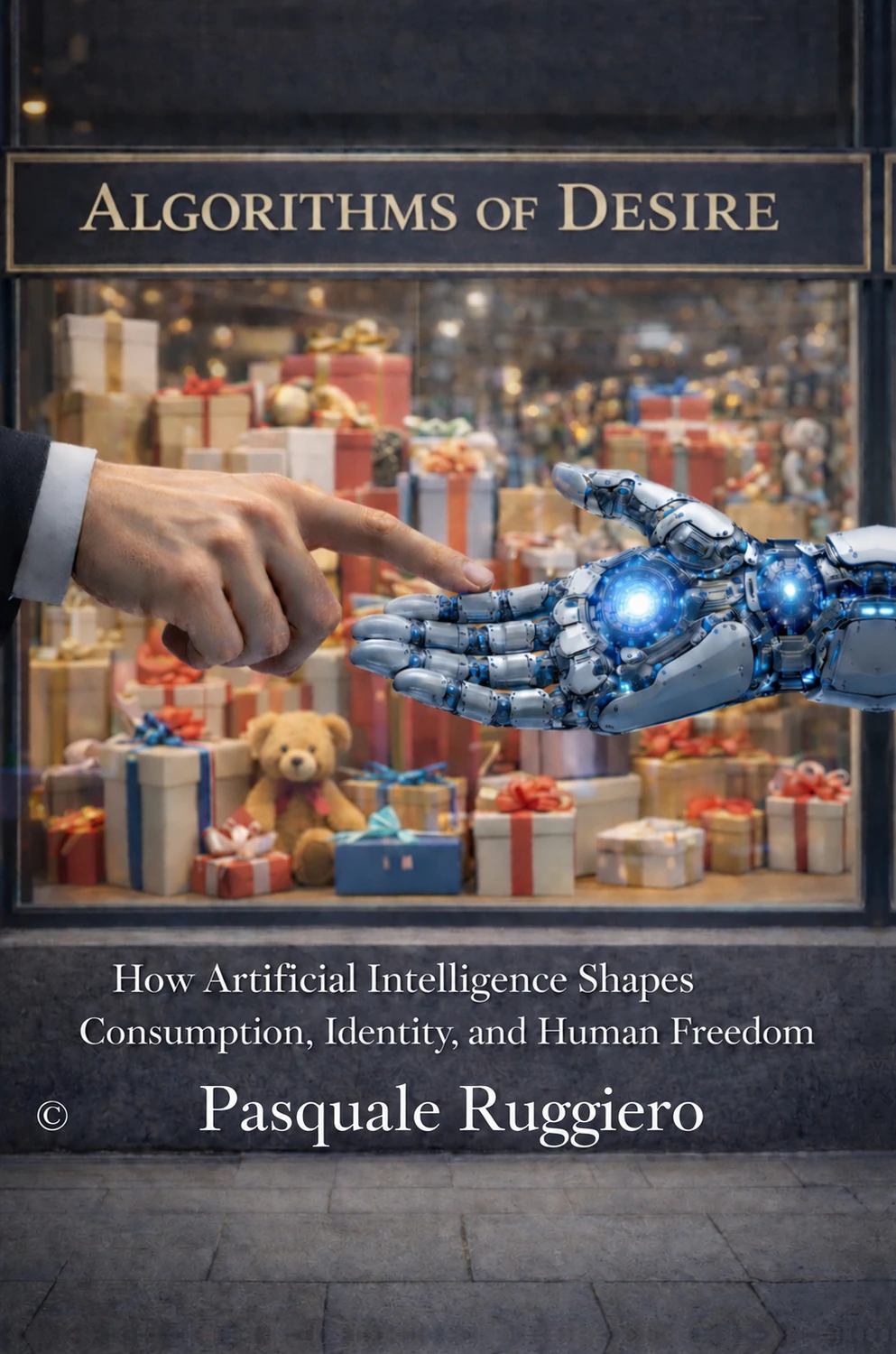
Algorithms of Desire: How Artificial Intelligence Shapes Consumption, Identity, and Human Freedom
Algorithms of Desire by Pasquale Ruggiero explores how AI shapes consumption, digital identity and human freedom through predictive advertising and persuasion.
Algorithms of Desire by Pasquale Ruggiero examines how artificial intelligence connects human desire with consumption, digital identity and personal freedom. Predictive algorithms can anticipate preferences from online behavior; the deeper question is how the environments built around those predictions influence the preferences themselves. The essay invites readers to examine the relationship between useful personalization and the gradual shaping of choice.
Its focus moves from predictive advertising and anticipated consumption to digital avatars, identity and cognitive defense. These themes bring AI and consumer behavior into a wider philosophical discussion: when a platform selects what deserves our attention, how much of the resulting desire reflects our own judgment? The attention economy, behavioral manipulation and algorithmic persuasion provide a vocabulary for asking that question without treating every recommendation as coercion.
The full title, Algorithms of Desire: How Artificial Intelligence Shapes Consumption, Identity, and Human Freedom, describes the central connection of the book. It places ordinary digital experiences—shopping, browsing, presenting ourselves online—within a reflection on autonomy. The subject concerns what happens before a visible decision: which possibilities reach us, which identities seem desirable, and which alternatives remain outside the frame.
Consumption · Identity · Freedom
Understanding algorithms and human desire
Predictive advertising and consumption
Predictive advertising brings together the commercial aim of reaching an audience and the technological capacity to infer patterns. A purchase, a search or time spent looking at an image can become part of a picture of likely interests. The important distinction is between a prediction about behavior and an explanation of a person: a model can identify a pattern while missing the reasons, doubts and circumstances behind it.
This is the setting for the book’s inquiry into consumption. Personalization may help someone find a relevant product, yet the selection and repetition of messages also make some options more prominent. Asking how desire is shaped means looking at the whole environment of choice, including the business interests that determine what is recommended and how a person’s attention is valued.
Attention and algorithmic persuasion
Attention is the bridge between what a system displays and what a person considers. In an economy that competes for engagement, visibility is consequential: the order of recommendations, the appeal of a message and the return of familiar themes can influence what appears important. Algorithmic persuasion describes this relationship between the design of a digital experience and the direction of a user’s interest.
The question is therefore broader than whether an advertisement is convincing. It concerns the conditions under which judgment is exercised. Understanding those conditions gives readers a way to ask who selects the available signals, which outcomes are rewarded, and whether convenience leaves enough room for reflection. Influence varies across situations; awareness begins by examining that variation.
Digital identity and desired selves
Digital identity is formed through what people show, what they encounter and how others respond. Avatars and online profiles can open possibilities for expression, but they also place self-presentation within systems of comparison and visibility. The desire for recognition may become connected to the identities that receive attention, encouraging a person to ask which version of the self is being rewarded.
In this context, the relationship between algorithms and human desire extends beyond buying things. It reaches the images of a life worth pursuing and the sense of belonging that accompanies them. The essay’s themes invite reflection on how a chosen identity relates to a predicted profile, and on the space a person needs to develop beyond what a system expects.
Human freedom and cognitive defense
Human freedom includes the capacity to recognize influence and reconsider a preference. Cognitive defense gives that concern a practical direction: notice the sources of a recommendation, pause before accepting its urgency, and compare the options that a single feed leaves out. These are questions readers can bring to everyday digital experience, rather than a promise that individual awareness can remove every structural imbalance.
The book’s emphasis on critical awareness connects autonomy with responsibility. A meaningful discussion must consider users, educators, platforms and the institutions that shape digital life. For readers, the starting point is to make the architecture of choice more visible, so that technology can be evaluated in relation to human purposes and a recommendation remains open to judgment.
Who should read this essay?
This English-language essay is for readers interested in AI ethics, digital culture, consumer behavior and the philosophy of technology. Educators and students can use its questions to discuss persuasion and identity; professionals working with communication or digital products can consider how their choices affect autonomy. General readers can connect the same themes to the recommendations and commercial messages they meet each day.
Patt Rogger, previously used by Pasquale Ruggiero and still present in some English-language bibliographic records.
Algorithms of Desire — Pasquale Ruggiero is the identification used in this author’s library. The earlier publishing name is retained as a bibliographic connection to existing records. To explore the work in Italian, visit Algoritmi del Desiderio.
Pasquale Ruggiero, a contemporary essayist and author, has for years focused on the critical analysis of the technological, cultural, and social transformations associated with the development of Artificial Intelligence and algorithmic systems. His research and writing lie at the intersection of philosophical inquiry, socioeconomic analysis, and public ethics, with particular attention to their effects on work, education, individual freedom, and human identity in the digital society.
Bibliographic note: some earlier English-language editions and bibliographic records list the publishing name Patt Rogger, previously used by Pasquale Ruggiero.