The Invisible Revolution of Artificial Intelligence
An accessible essay by Pasquale Ruggiero on how artificial intelligence shapes work, information, democracy and everyday choices, and on the possibilities of digital humanism.
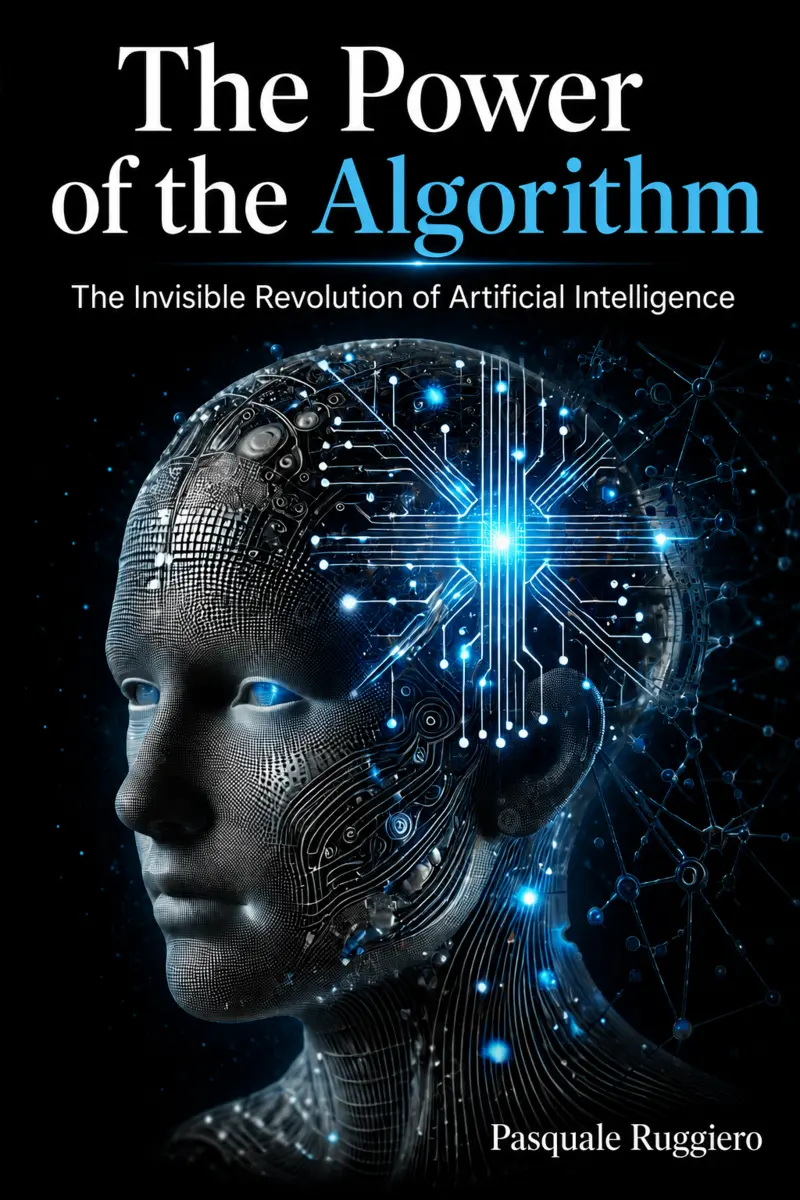
The Power of the Algorithm: The Invisible Revolution of Artificial Intelligence explores the social power of AI beyond its technical achievements. Pasquale Ruggiero examines how algorithmic systems influence what people see, the choices available to them and the institutions that organize daily life.
The book brings together work, information, democracy and geopolitical change. Its central concern is human responsibility: how can people understand and govern systems that increasingly shape their opportunities? The discussion connects ethical and political questions with the search for a digital humanism.
Readers are invited to approach innovation with awareness and judgment. Understanding algorithmic power is a way to participate in technological change, ask better questions and keep human dignity at the center of public decisions.
The question of how to guide technological power also opens a discussion of human awareness. In Science & Consciousness, Pasquale Ruggiero brings scientific knowledge, inner life and responsibility into dialogue.
The influence of platforms also reaches private preferences. For a closer look at AI and human desire, read Algorithms of Desire by Pasquale Ruggiero, on predictive advertising, digital identity and personal autonomy.
Questions behind the technology
Artificial intelligence, power and society
Information and everyday choices
The order in which information appears can affect what receives attention and what remains unseen. Recommendation systems and digital platforms make algorithmic influence part of ordinary experience. This perspective invites readers to consider the relationship between convenience, awareness and the freedom to choose.
Work and economic change
Automation raises questions about the place of people in an economy shaped by AI. Alongside changes in tasks and productivity come questions of opportunity, responsibility and the distribution of benefits. The book situates work within the wider social transformation rather than treating it as an isolated technical problem.
Democracy and public responsibility
When algorithmic systems help organize access to information and guide decisions, their effects reach public life. Who can understand those systems, challenge their outcomes and take responsibility for their use? These questions connect AI ethics with institutions, democratic participation and the exercise of power.
Digital humanism
The book’s discussion opens toward digital humanism: a perspective that gives human meaning, dignity and judgment a central place in technological development. It invites reflection on the kind of society people want to build with AI and on the choices that remain theirs to make.
Reading the present
Who is this book for?
This English-language essay is an invitation to readers interested in AI’s human, social and political implications. Its accessible approach offers a starting point for students, educators, professionals and general readers who want to connect technological change with questions of freedom and responsibility.
Some retailers and bibliographic records credit the English paperback to Patt Rogger, the publishing name previously used by Pasquale Ruggiero. The details above identify the edition linked from this page.
Pasquale Ruggiero, a contemporary essayist and author, has for years focused on the critical analysis of the technological, cultural, and social transformations associated with the development of Artificial Intelligence and algorithmic systems. His research and writing lie at the intersection of philosophical inquiry, socioeconomic analysis, and public ethics, with particular attention to their effects on work, education, individual freedom, and human identity in the digital society.
Bibliographic note: some earlier English-language editions and bibliographic records list the publishing name Patt Rogger, previously used by Pasquale Ruggiero.